Kerala weddings still value tradition deeply. Brides care closely about their wedding outfits. But how they choose these outfits has changed. Social media now plays a bigger role in bridal fashion choices in Kerala.
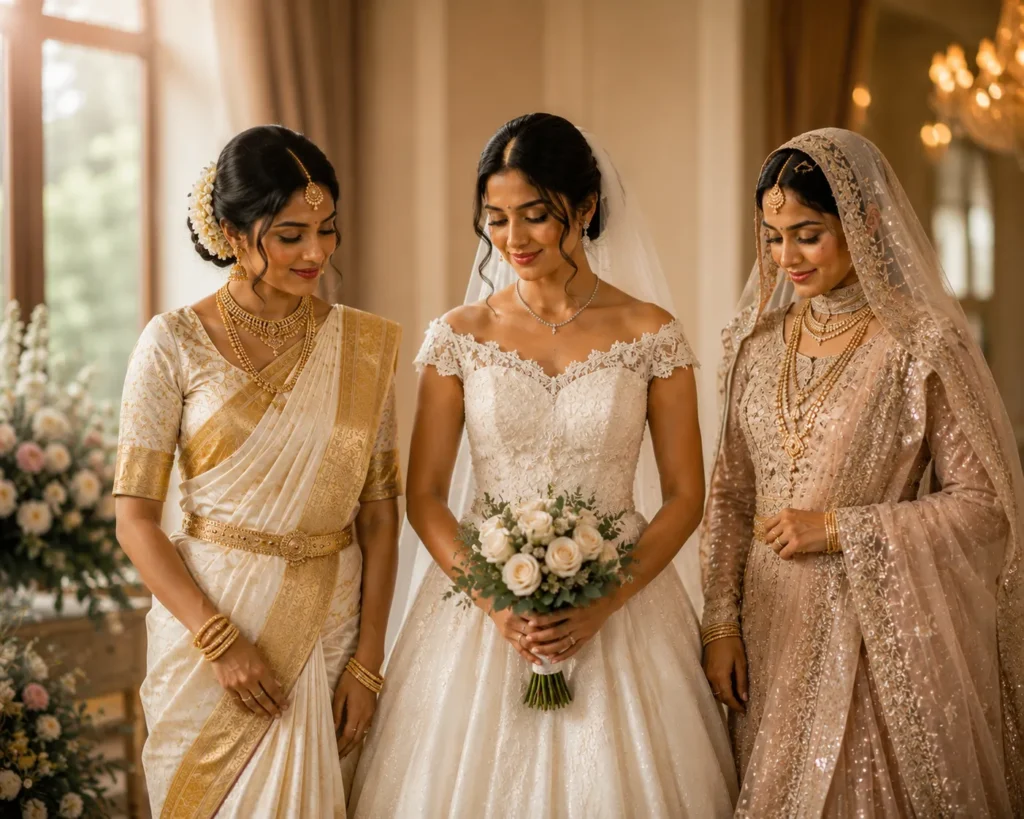
Reels and Pinterest boards spread trends quickly. A look can travel across states within days. Brides now discover new styles online. This post explores how social media shapes Kerala’s bridal fashion. It covers Hindu, Christian, and Muslim wedding traditions.
Why Brides Are Scrolling Before They Shop
Brides once visited boutiques with open minds. Now many arrive with clear ideas. They save drape styles, colours, and blouse cuts. These ideas mostly come from social media.
This changes how designers work too. A trend from outside Kerala spreads fast. It reaches local brides almost instantly. Designers now respond to online trends daily.
The shift applies across every community. Hindu, Christian, and Muslim brides all browse online. Each community still keeps its own core traditions. Social media mostly changes styling, not structure.
Traditional Choices Still Lead the Ceremony
Every Kerala community has a defining ceremony look. These looks stay fairly fixed year to year. Social media adds detail and variation within them. It rarely replaces the core choice itself.
Kasavu Saree and Mundum Neriyathum
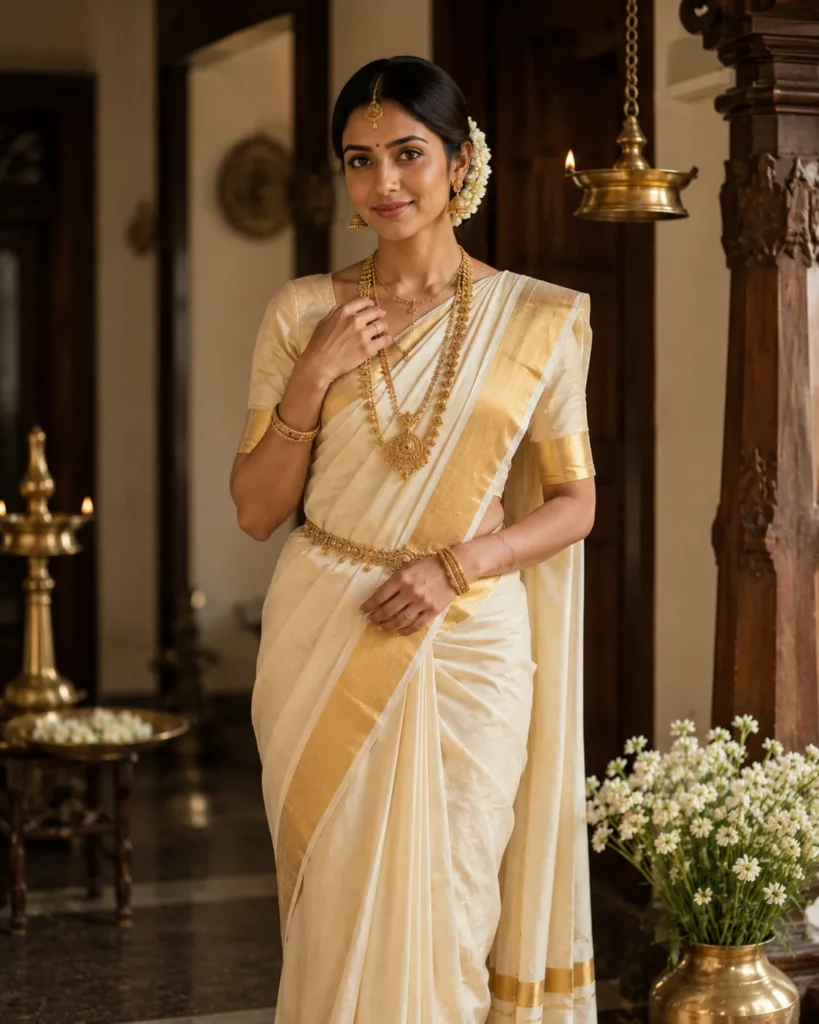
The Kasavu saree remains the top Hindu choice. Its older form is Mundum Neriyathum. Both stay central to Hindu weddings today. The look features cream fabric with gold borders.
Social media has not replaced this choice. It has made brides more particular instead. Many now ask for handwoven Kasavu directly. Machine made copies are less acceptable now.
Some brides name specific weaving towns too. Balaramapuram and Chendamangalam come up often. These towns are known for authentic handloom work. Naming them shows how specific research has become.
White Gowns for Church Weddings
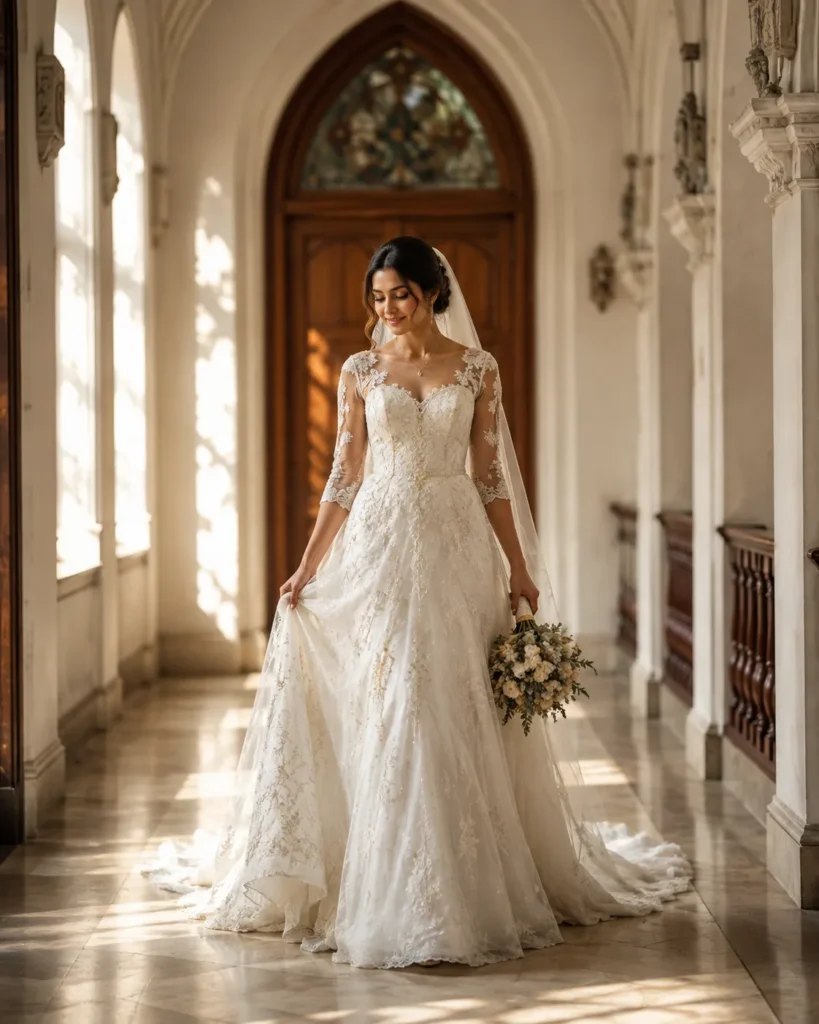
Some Kerala Christian brides wear gowns instead. This is common among Latin Catholic families. Urban brides across denominations choose gowns too. The style ranges from simple to elaborate.
Simple white A line gowns suit smaller ceremonies. Bigger celebrations often feature detailed lace gowns. Some include long trains for a dramatic entry. Gold accents are sometimes added for warmth.
Interest in these styles has grown online. Brides now compare gown cuts before deciding. Detailing choices like lace and trains get discussed more. Social media has widened exposure to different options.
Nikah Attire for Muslim Brides
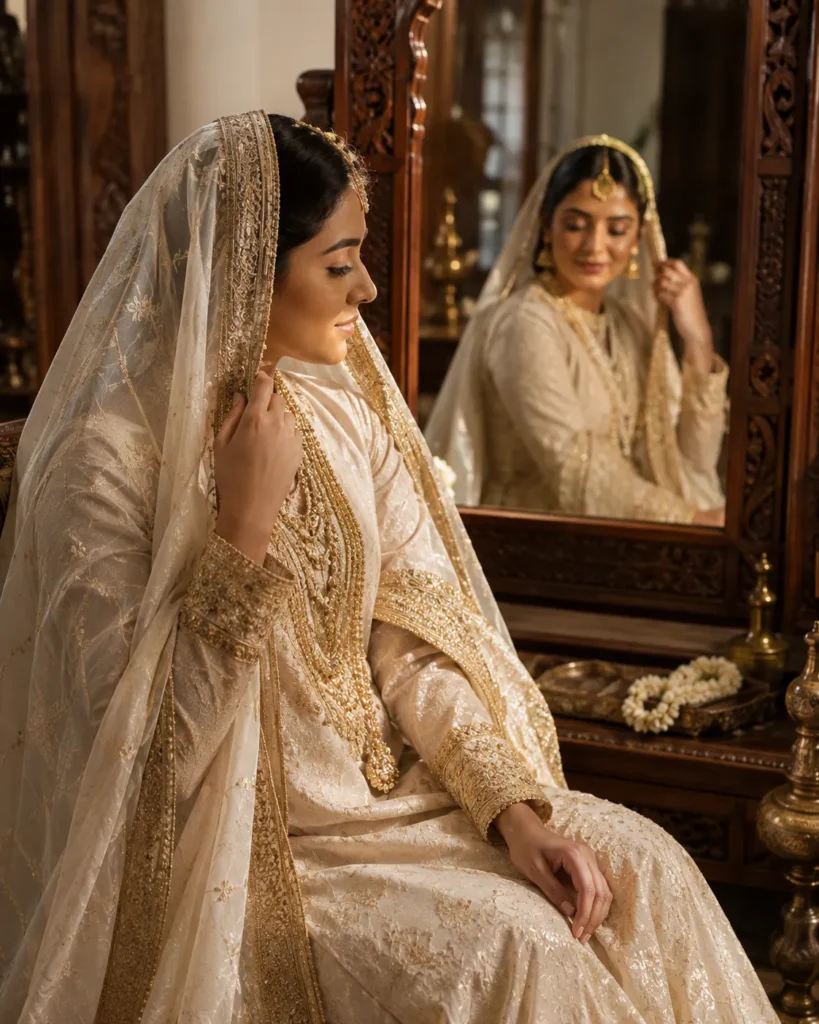
Muslim brides follow the Nikah tradition closely. The look uses heavy silk or brocade. Common colours include ivory, gold, and pastel shades. Comfort and dignity matter alongside appearance.
Outfit choices include a set mundu with blouse. A sharara is another common option. Some brides choose an embroidered kaftan instead. Each option keeps the look modest and rich.
Full Malabar gold defines the traditional Nikah look. Sets can weigh between eighty and two hundred grams. Pieces often include a Manga Mala and Palakka Mala. A matching dupatta or veil completes the outfit.
Social media has not changed this core look much. It has helped brides compare gold set designs though. Some now research jewellery pieces by name first. Fabric texture and drape also get more attention now.
What Brides Wear for the Reception
Most Kerala weddings include a separate reception. Brides usually change outfits for this event. The reception look tends to feel lighter. Comfort matters more across longer hours here.
Silk Sarees and Lehengas
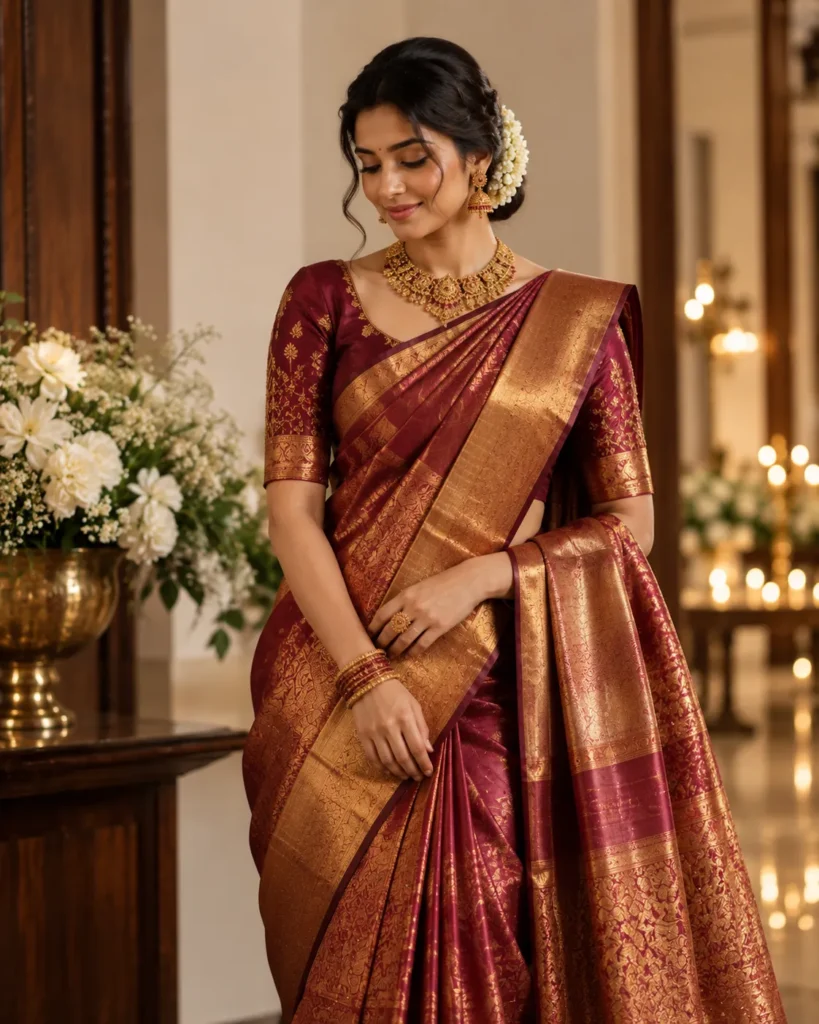
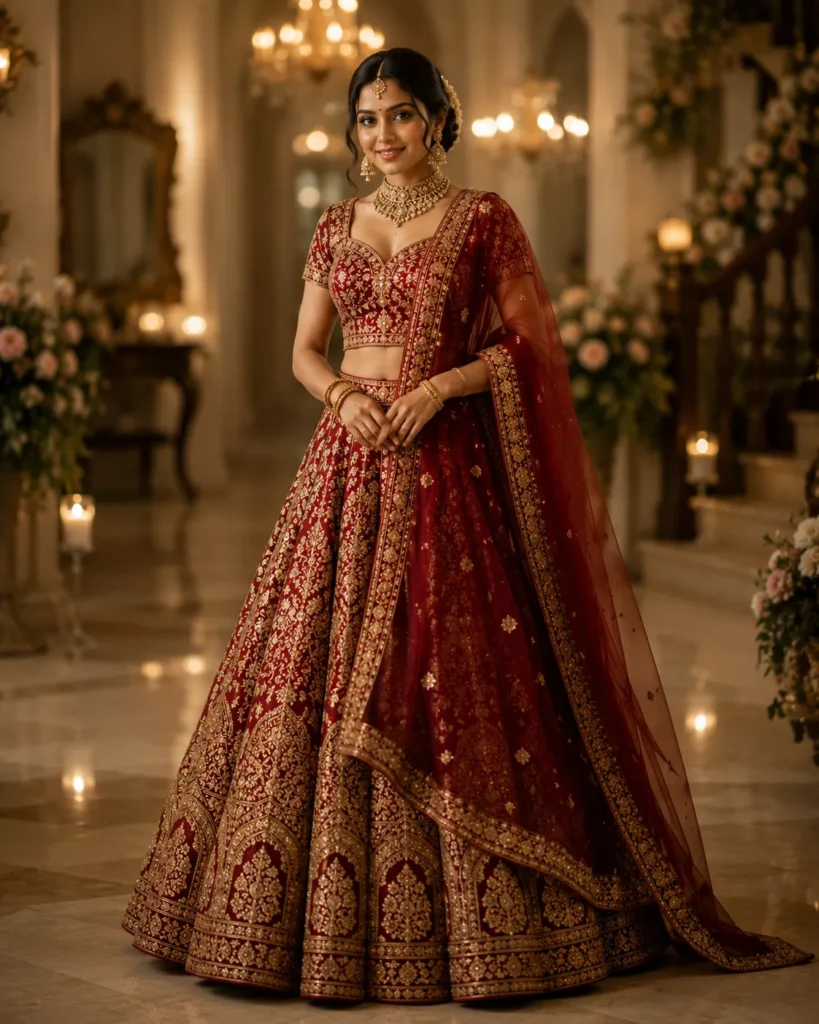
Hindu and Christian brides often choose silk sarees. Kanchipuram and Banarasi remain common reception picks. Some brides now choose a lehenga instead. Colour choices lean toward gold, champagne, or red.
Jewel tones are increasingly requested for receptions. Emerald and wine red are common favourites. Lighter fabric weights are also popular now. These choices help with comfort during long events.
Walima Look for Muslim Brides
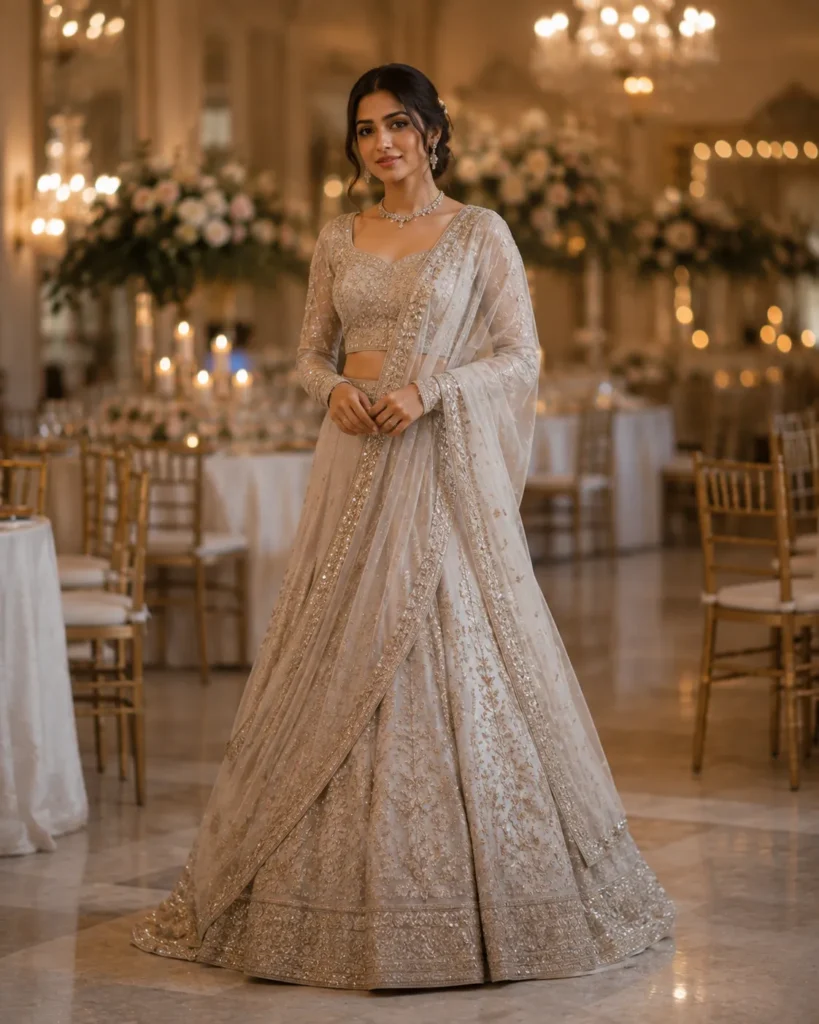
Muslim brides often follow the Nikah with Walima. This reception has a lighter overall tone. Many brides choose a contemporary lehenga instead. A gown is also a common modern choice.
Jewellery becomes noticeably lighter for this event. The heavy Nikah gold set is set aside. Simpler pieces suit the relaxed setting better. Comfort and ease of movement matter more here.
Modern Styling Trends Seen Online
Across all three communities, styling trends overlap. These trends affect finishing details, not core dress choices. Social media speeds up how fast they spread. Below are the most common ones right now.
New Ways to Wear a Saree
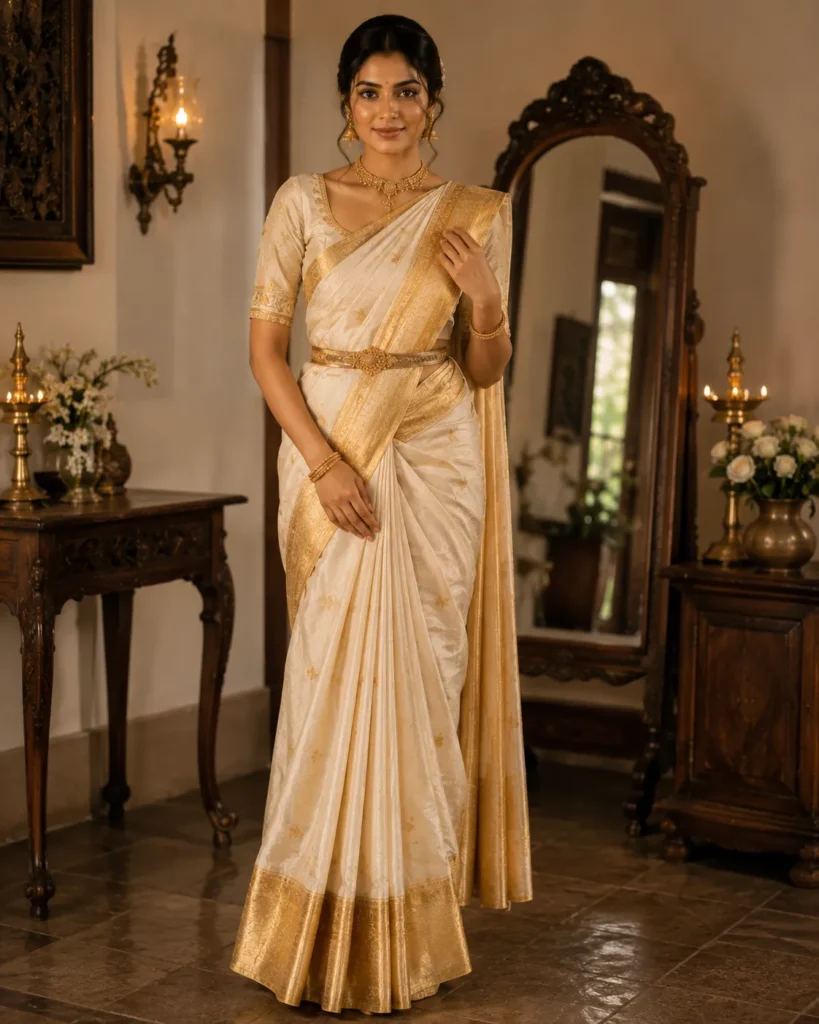
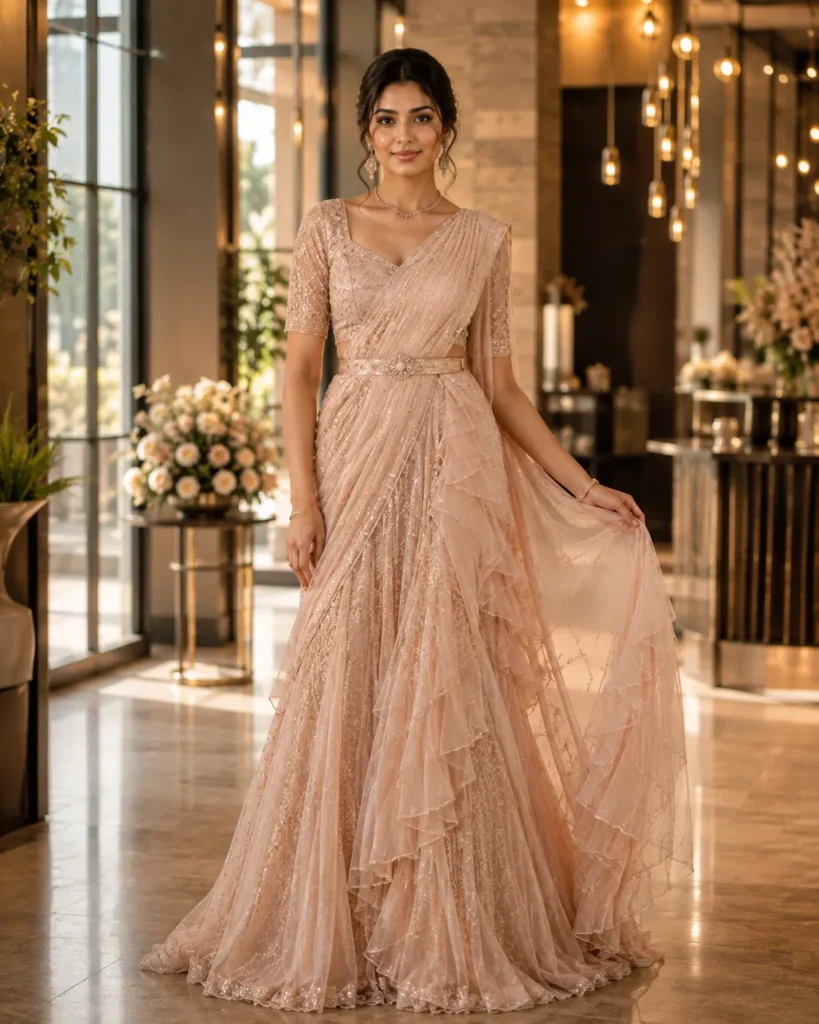
Sarees are being styled in new ways. Pre pleated sarees save time for events. Belted saree looks add a modern touch. These changes update tradition without replacing it.
A newer style is the saree gown. It blends saree draping with a gown base. Brides wear it for pre wedding shoots. It suits cocktail nights, not the ceremony itself.
Fabric and Colour Choices
Organza and tissue silk are trending fabrics. They photograph well and feel lightweight. Soft pastel shades are gaining popularity too. Many pastels now include fine metallic borders.
These lighter fabrics suit warm Kerala weather well. They also photograph better in daylight events. Brides across communities are asking for them more. Heavier fabrics stay reserved for main ceremonies.
Fit Still Decides the Final Look
A saved style only works when adjusted. Drape, fabric weight, and blouse fit matter. These details rarely show up in reels. Petticoat colour and fall stitching matter too.
Blouse necklines also change by occasion. Simple necks suit the main ceremony. Detailed backs suit reception outfits better. Small choices affect how outfits look overall.
This applies across sarees, gowns, and shararas alike. A well fitted outfit always outperforms a copied photo. Fabric behaves differently on every body type. Adjustment is where a trend becomes wearable.
Conclusion
Social media has made bridal research easier overall. Brides across every community explore more options now. But a saved photo only starts the process. Fitting and styling still finish it properly.
Each Kerala tradition keeps its own defining look. Hindu, Christian, and Muslim brides each follow their path. Social media adds detail, comparison, and variation within that. It has not replaced what makes each tradition distinct.