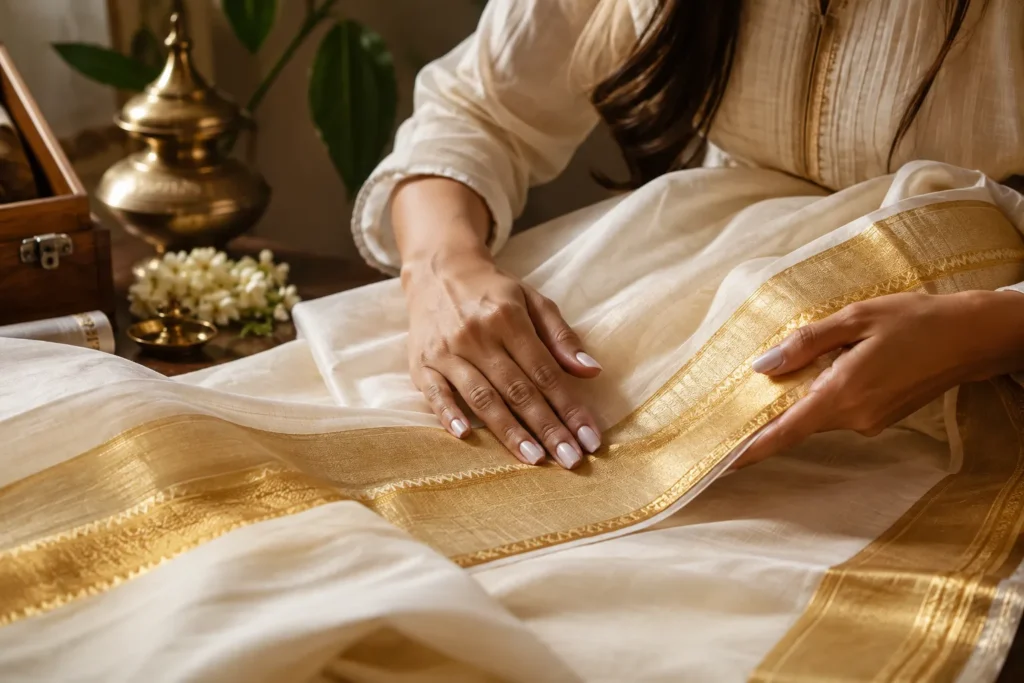
A Kasavu saree is more than just traditional attire. It represents Kerala’s rich weaving heritage, timeless elegance, and cultural pride. Whether you wear it for Onam, a wedding, Vishu, or another special occasion, proper care helps preserve its beauty for years.
This kasavu saree care guide explains everything you need to know about washing, drying, starching, ironing, storing, and maintaining your saree. By following the right care methods, you can protect the delicate fabric, preserve the zari border, and keep your Kerala handloom saree looking as graceful as the day you bought it.
Let’s begin by understanding why a Kasavu saree deserves special care.
Understanding Kasavu Saree Fabric
A Kasavu saree is Kerala’s traditional handloom saree, known for its off-white or cream-colored body and gold or silver zari border. Most Kasavu sarees are woven from cotton or cotton-blend fabrics, making them lightweight, breathable, and comfortable for festive occasions.
Because the fabric is delicate and the zari requires gentle handling, proper care is essential. Washing, drying, ironing, and storing the saree correctly helps preserve its beauty and keeps it looking elegant for years.
Why Proper Kasavu Saree Care Matters
Proper care keeps your Kasavu saree beautiful for years. It protects both the fabric and zari border. Simple maintenance prevents common damage and discoloration. A well-maintained saree always looks fresh and elegant. It also stays ready for every special occasion.
Proper Kasavu saree care helps you:
- Preserve the shine of the gold or silver zari.
- Prevent yellowing and fabric discoloration.
- Maintain the cotton fabric’s softness and texture.
- Reduce wrinkles, stains, and everyday wear.
- Extend the saree’s lifespan with proper maintenance.
- Keep your saree looking elegant for every occasion.
How to Wash a Kasavu Saree Properly
Washing a Kasavu saree the right way helps protect both the fabric and the zari border. Gentle cleaning removes dirt without affecting the saree’s texture or shine. Harsh washing methods can weaken the cotton and dull the zari over time. Follow these simple steps to keep your saree looking fresh and beautiful after every wash.
Hand Wash with Cold Water
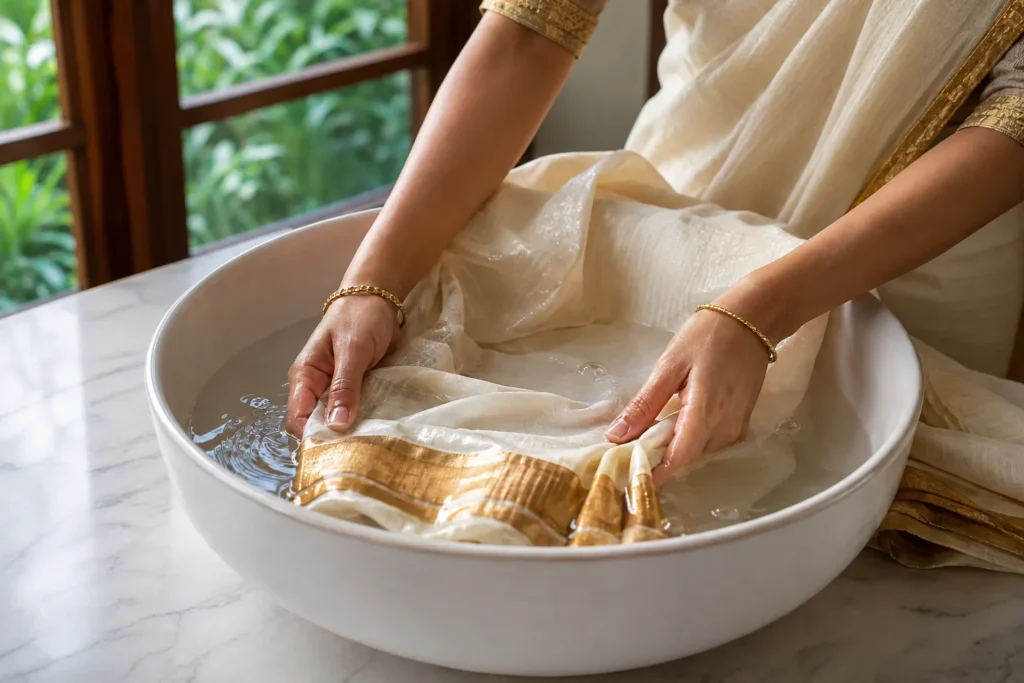
Always wash your Kasavu saree by hand using cold or room-temperature water. Gently dip the saree into the water and move it slowly without twisting or scrubbing. This method protects the cotton fibers and reduces stress on the zari border.
Use a Mild pH-Balanced Detergent
Choose a mild liquid detergent designed for delicate fabrics. Strong detergents, bleach, and fabric whiteners can damage the cotton and reduce the shine of the zari. Use only a small amount of detergent and rinse the saree thoroughly to remove any residue.
Wash Separately
Wash your Kasavu saree separately from other clothes. Colored garments may release dye that can stain the cream-colored fabric. Washing it alone also prevents friction that could damage the delicate weave or zari.
Avoid Machine Washing and Harsh Chemicals
Machine washing can stretch the fabric and crease the zari border. The spinning cycle also puts unnecessary pressure on the saree. Similarly, avoid bleach, stain removers, and other harsh cleaning chemicals, as they may weaken the fabric and affect its appearance.
Dry in Shade

After washing, gently squeeze out excess water without wringing the saree. Hang it in a shaded, well-ventilated area to dry naturally. Avoid direct sunlight, as prolonged exposure can cause the fabric to yellow and gradually reduce the zari’s shine.
Proper washing is the foundation of kasavu saree maintenance. With a little extra care, your saree will remain soft, clean, and elegant for many years.
How to Starch and Iron a Kasavu Saree
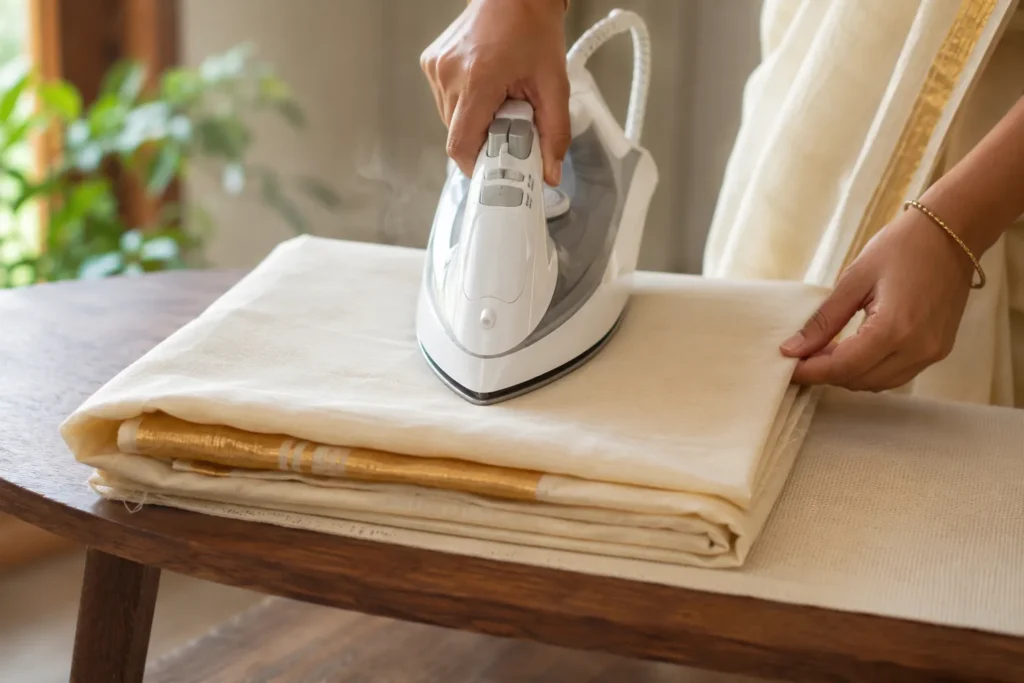
Starching and ironing help a Kasavu saree maintain its crisp look and elegant drape. However, using the wrong method can damage the fabric or reduce the zari’s shine. Always use gentle techniques to keep the saree looking its best.
Use Natural Rice or Corn Flour Starch
Natural rice starch is the traditional choice for Kasavu sarees. You can also use a light corn flour starch solution. Avoid using excessive starch, as it can make the fabric stiff and uncomfortable to wear.
Apply Starch Evenly
Dip the saree into the starch solution or apply it evenly across the fabric. Ensure the starch spreads uniformly without leaving patches. After starching, allow the saree to dry partially before ironing.
Iron on Low Heat
Set your iron to a low or medium heat suitable for cotton fabrics. High temperatures can weaken the fibers and affect the zari border. Always check that the iron plate is clean before use.
Iron from the Reverse Side
Turn the saree inside out before ironing, especially around the zari border. Ironing from the reverse side reduces direct heat on the metallic threads and helps preserve their shine.
Iron While Slightly Damp
For the best results, iron the saree while it is slightly damp. This helps remove wrinkles more easily and gives the fabric a neat, smooth finish without using excessive heat.
Using the right starching and ironing techniques keeps your Kasavu saree crisp, elegant, and ready for every festive or special occasion.
Best Ways to Store a Kasavu Saree
Proper storage is just as important as proper washing. Even a clean saree can lose its beauty if stored incorrectly. A few simple storage habits will help preserve the fabric and zari for many years.
Wrap in Muslin or White Cotton Cloth
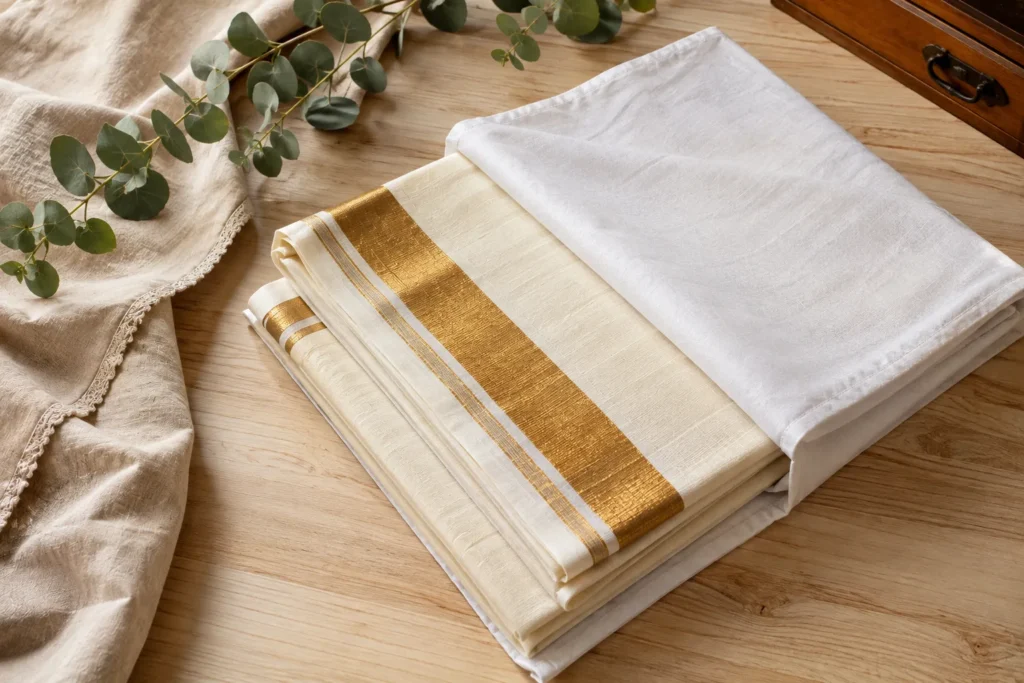
Always wrap your Kasavu saree in a clean muslin or white cotton cloth before storing it. The fabric allows air to circulate while protecting the saree from dust and light. Avoid using colored cloth that may transfer dye over time.
Avoid Plastic Covers
Plastic covers trap moisture and restrict airflow. Over time, this can cause yellowing, mildew, and damage to the zari. Choose breathable fabric covers instead to keep the saree fresh.
Store in a Cool, Dry Place
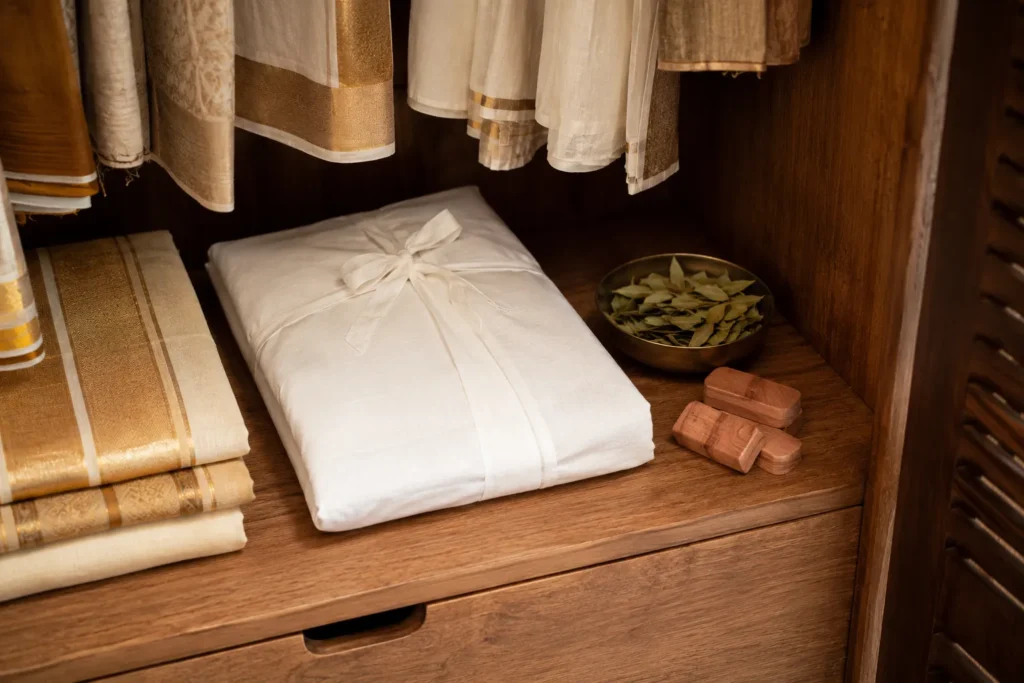
Keep your saree in a clean, dry wardrobe away from direct sunlight and humidity. Excess moisture can weaken the cotton fabric and dull the zari border. If your storage area is humid, use moisture absorbers to keep it dry.
Refold Every 3–6 Months
Avoid leaving the saree folded in the same position for long periods. Refold it every three to six months to prevent permanent creases and reduce stress on the zari border. This simple habit also helps maintain the saree’s original shape.
Protect from Moisture and Pests
Store the saree away from damp areas and insects. You can place natural repellents like dried neem leaves or cedar blocks nearby to help keep pests away. Avoid placing them directly on the fabric to prevent stains.
Good storage practices are an important part of kasavu saree maintenance. They help preserve the fabric, protect the zari, and ensure your saree stays beautiful for every special occasion.
Common Mistakes That Damage Kasavu Sarees
A few common mistakes can reduce the life of your Kasavu saree. Avoid these habits to keep the fabric and zari in good condition.
- Machine washing instead of hand washing.
- Using hot water for cleaning.
- Washing with harsh detergents or bleach.
- Drying the saree in direct sunlight.
- Ironing with high heat settings.
- Hanging the saree for long periods.
- Storing it in plastic covers.
- Ignoring moisture and small stains.
These simple mistakes can cause fading, yellowing, wrinkles, or damage to the zari. Following the right care routine will help your Kasavu saree stay beautiful for many years.
Tips to Maintain the Zari Border
The zari border is the most delicate part of a Kasavu saree. With proper care, it can retain its shine and beauty for many years. Follow these simple tips to protect it from everyday damage.
Avoid Perfumes and Deodorants
Do not spray perfumes or deodorants directly on the zari. The chemicals may reduce its shine over time. Apply fragrances before wearing your saree.
Fold the Saree Carefully
Fold the saree neatly without putting pressure on the zari border. Avoid making the same fold every time to prevent permanent crease lines.
Keep Away from Moisture
Store the saree in a dry place. Moisture can cause discoloration and affect the zari’s finish. Always ensure the saree is completely dry before storing it.
Clean Stains Immediately
Treat small stains as soon as possible. Gently blot the affected area with a soft, damp cloth. Avoid rubbing, as it can damage both the fabric and the zari.
Choose Professional Cleaning When Needed
Some stains need expert cleaning. Do not try harsh chemicals at home. Choose a professional cleaner experienced with handloom sarees. They know how to clean delicate fabrics safely. Professional care helps protect both the fabric and the zari border.
How Often Should You Wash a Kasavu Saree?
A Kasavu saree does not need frequent washing. Washing it only when necessary helps protect the fabric and preserve the zari border. After each wear, air the saree in a shaded place before storing it. This helps remove moisture and keeps the fabric fresh. If you notice a small stain, clean only the affected area instead of washing the entire saree.
By avoiding unnecessary washing, your Kasavu saree will stay soft, elegant, and beautiful for many years.
Conclusion
A Kasavu saree is a timeless part of Kerala’s tradition and deserves proper care. By following the right washing, drying, ironing, and storage methods, you can protect the fabric and preserve the zari for years. Simple care habits today will help your saree remain elegant for every festival, celebration, and family occasion.
If you’re looking for authentic Kasavu sarees, Kerala handloom sarees, or expert guidance on choosing the perfect traditional outfit, explore Zyora‘s collection. Our team is here to help you find beautifully crafted sarees and share the best care tips to keep them looking their finest for years to come.