Shopping for ethnic wear is often an exciting experience. Whether you’re preparing for a wedding, festival, office celebration, or family gathering, finding the perfect outfit can make the occasion feel even more special. However, many women end up with outfits that stay in the wardrobe after just one use not because they aren’t beautiful, but because they weren’t the right purchase.
A stunning design alone doesn’t guarantee a good investment. Factors like fabric quality, fit, comfort, versatility, and maintenance play a much bigger role in determining whether you’ll truly enjoy wearing an outfit again and again. Overlooking these details can lead to uncomfortable clothing, unnecessary alterations, or purchases that don’t suit your lifestyle.
Understanding the 10 mistakes women make while buying ethnic wear can help you shop with greater confidence and avoid costly decisions. From choosing the right fabric to selecting outfits that match your body shape and wardrobe, small considerations can make a significant difference in both comfort and value.
In this guide, we’ll explore the most common ethnic wear buying mistakes and share practical tips to help you make smarter, more informed purchases every time.
Mistake 1: Choosing Style Over Comfort
It’s easy to fall in love with an outfit that looks stunning on a mannequin or in an Instagram post. Intricate embroidery, dramatic sleeves, layered dupattas, and luxurious fabrics can make an outfit visually appealing. But if it isn’t comfortable to wear, you’ll probably avoid wearing it after the first occasion.
Many women focus only on appearance without considering how the outfit feels during several hours of wear. A wedding ceremony, festival, or family function often involves standing, walking, sitting, eating, and socializing for extended periods. An outfit that restricts movement can quickly become frustrating, no matter how beautiful it looks.
Common comfort-related issues include:
- Heavy embroidery that adds unnecessary weight
- Stiff or non-breathable fabrics
- Tight necklines and sleeves
- Dupattas that constantly slip or require adjustment
- Tight-fitting silhouettes that restrict movement
Comfort doesn’t mean compromising on style. Today, many premium ethnic outfits combine elegant designs with lightweight fabrics and thoughtful tailoring. Breathable materials such as cotton, linen, rayon, and soft silk blends provide both comfort and sophistication, making them suitable for long events.
Common Mistake
Buying an outfit because it looks impressive in photos without considering how comfortable it will be throughout the day.
Pro Tip
Before making a purchase, imagine wearing the outfit for six to eight hours. Ask yourself:
- Can you sit comfortably?
- Can you walk freely?
- Is the fabric suitable for the weather?
- Will the outfit feel heavy after a few hours?
An outfit that balances style with comfort is far more likely to become a favorite in your wardrobe than one that’s beautiful but difficult to wear.
Mistake 2: Buying the Wrong Size or Ignoring Your Body Shape
Even the most beautifully designed ethnic outfit can lose its appeal if it doesn’t fit well. One of the biggest ethnic wear buying mistakes women make is assuming that a standard size will fit perfectly across every brand. In reality, sizing varies significantly, and an outfit labeled “M” in one brand may fit very differently in another.
Another common mistake is choosing a trending silhouette without considering whether it complements your body shape. Fashion trends come and go, but a well-fitted outfit that enhances your natural proportions will always look elegant and boost your confidence.
Before purchasing ethnic wear, take fresh body measurements rather than relying on old ones. Weight fluctuations, tailoring preferences, and brand-specific sizing can all affect how an outfit fits. If you’re shopping online, compare your measurements with the brand’s size chart instead of selecting your usual size by habit.
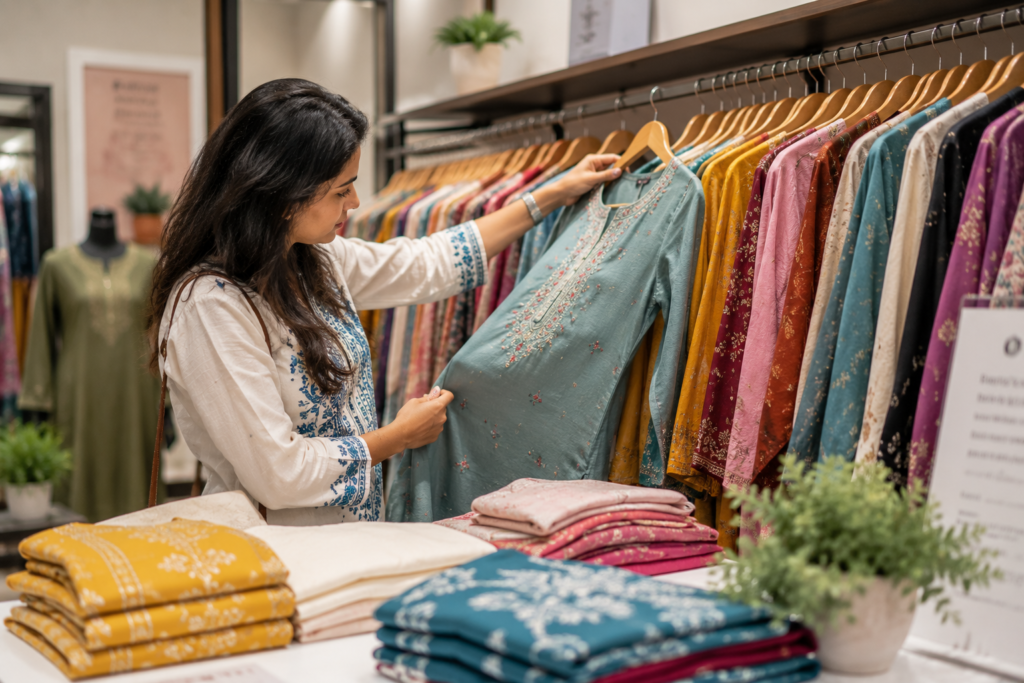
Different silhouettes flatter different body types. For example:
- A-line kurtas create a balanced look for most body shapes and offer a comfortable fit.
- Straight-cut suits provide a clean, structured appearance and work well for office wear and formal occasions.
- Anarkali suits add graceful movement and are ideal for festive celebrations and weddings.
- Sharara sets create a statement look while offering comfort for longer events.
- Palazzo suits combine elegance with ease of movement, making them suitable for both casual and festive occasions.
Remember that a small alteration can dramatically improve how an outfit looks. Adjusting the sleeve length, waist, hemline, or shoulder fit often transforms a good outfit into one that feels custom-made.
Common Mistake
Choosing a size based only on the label or buying a trendy style without thinking about how it suits your body shape.
Pro Tip
Before buying, measure your bust, waist, hips, and shoulder width. If you’re between sizes, review the garment measurements carefully and choose the option that allows for comfortable movement. When needed, factor in the cost of minor alterations—they’re often worth it for a polished, flattering fit.
A well-fitted ethnic outfit doesn’t just look better—it feels more comfortable, photographs beautifully, and gives you the confidence to enjoy every occasion.
Mistake 3: Ignoring Fabric Quality and Stitching
When buying ethnic wear, it’s easy to be drawn to attractive colors, intricate embroidery, or eye-catching designs. However, the true quality of an outfit lies beneath its appearance. The fabric and stitching determine how comfortable the garment feels, how well it drapes, and how long it will last.
Poor-quality fabrics may lose their shape after a few washes, fade quickly, or become uncomfortable during long hours of wear. Likewise, weak stitching, uneven seams, and poorly attached embellishments can reduce the lifespan of even the most beautiful outfit. This is why checking the craftsmanship is just as important as choosing the design.
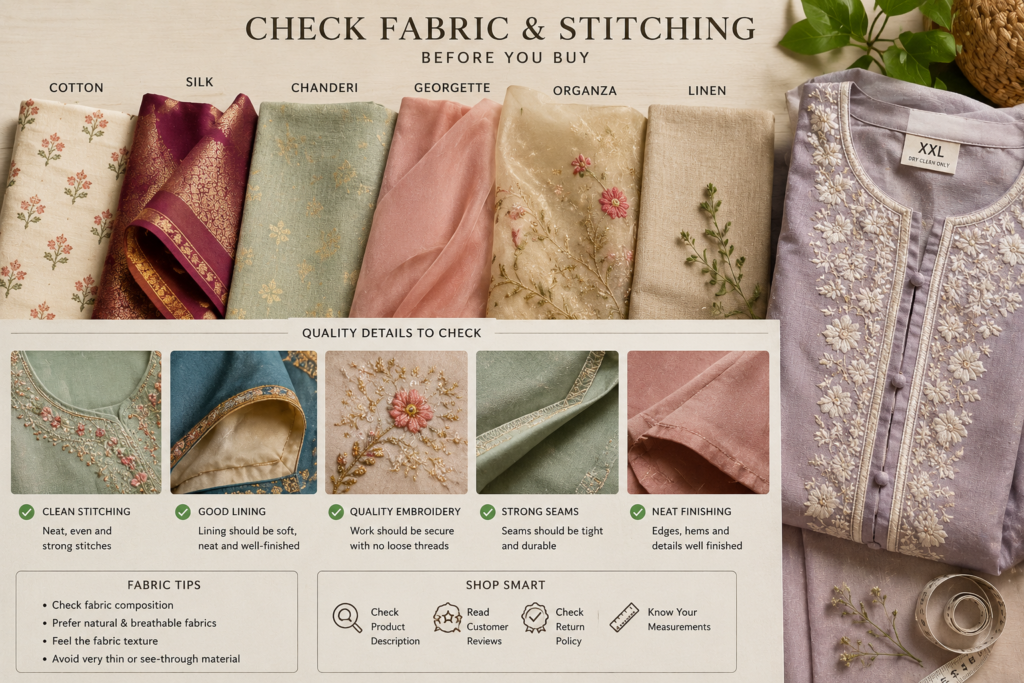
Different fabrics serve different purposes, so selecting the right one depends on the occasion, season, and your comfort preferences.
Some of the most popular fabrics used in ethnic wear include:
- Cotton – Lightweight, breathable, and perfect for everyday wear or warm weather.
- Silk – Luxurious with a rich finish, making it ideal for weddings and festive occasions.
- Chanderi – Elegant, lightweight, and know for its subtle sheen.
- Linen – Comfortable, airy, and suitable for casual or semi-formal outfits.
- Georgette – Flowy and graceful, often used for party wear and festive attire.
- Organza – Crisp and delicate, creating a structured yet sophisticated look.
- Rayon – Soft, comfortable, and versatile for daily or occasional wear.
Besides the fabric, pay attention to the overall construction of the garment. A well-made outfit should have neat stitching, secure seams, clean finishing, and a properly attached lining. If the outfit includes embroidery or embellishments, check whether they are firmly stitched rather than loosely glued or poorly finished.
For online purchases, read the product description carefully to understand the fabric composition. Close-up product images can also help you inspect the stitching, embroidery, and finishing before making a decision.
Common Mistake
Judging an outfit solely by its appearance without checking the quality of the fabric, lining, stitching, or overall craftsmanship.
Pro Tip
Before buying, inspect the inside of the garment whenever possible. Look for straight seams, neat finishing, secure embroidery, and a comfortable lining. A well-crafted outfit may cost more initially, but it usually offers better comfort, lasts longer, and maintains its appearance after repeated wear.
Investing in quality ethnic wear isn’t just about durability—it’s about enjoying an outfit that looks elegant, feels comfortable, and remains a valuable part of your wardrobe for years to come.
Mistake 4: Buying Without Considering the Occasion
Not every ethnic outfit is suitable for every event. One of the most common mistakes women make is purchasing a beautiful outfit without thinking about where, when, or how often they’ll actually wear it. An outfit that’s perfect for a grand wedding may feel too elaborate for a family gathering, while a simple cotton kurta might not create the desired impression at a festive celebration.
Choosing ethnic wear based on the occasion helps you strike the right balance between style, comfort, and practicality. It also ensures that you feel appropriately dressed and confident throughout the event.
Here’s how different occasions call for different choices:
- Office Wear: Choose subtle prints, breathable fabrics like cotton or linen, and comfortable silhouettes such as straight-cut kurtas or palazzo sets.
- Festivals: Bright colors, traditional motifs, and moderate embroidery work well while still allowing you to move comfortably during celebrations.
- Casual Outings: Lightweight kurtas, simple co-ord sets, or minimal ethnic wear offer effortless style without feeling overdressed.
- Family Gatherings: Elegant yet comfortable outfits with tasteful embellishments create a polished look suitable for spending long hours with family.
- Wedding Functions: Rich fabrics like silk, Chanderi, or georgette paired with detailed embroidery make a statement for occasions such as sangeet, mehendi, or receptions.
- Engagements and Receptions: Sophisticated designs with refined embellishments help you achieve a graceful, occasion-appropriate appearance without excessive heaviness.
Beyond the event itself, think about practical factors such as the weather, venue, duration, and level of formality. A heavily embroidered velvet outfit may feel uncomfortable during a daytime summer function, while a lightweight cotton suit may seem too casual for a formal evening reception.
Common Mistake
Buying an outfit because it’s attractive, without considering whether it suits the event, season, or expected level of comfort.5
Pro Tip
Before making a purchase, ask yourself:
- Where will I wear this?
- How many hours will I be in it?
- Is it suitable for the weather?
- Can I wear it for other occasions as well?
An outfit that matches the occasion doesn’t just help you look your best—it also ensures you feel comfortable, confident, and appropriately dressed. The most valuable pieces in your wardrobe are often the ones that can be worn across multiple events with just a few styling changes.
Mistake 5: Following Every Fashion Trend
Fashion trends can be exciting. Every season brings new colors, silhouettes, prints, and styling ideas that quickly take over social media. While it’s tempting to buy the latest viral outfit, making purchasing decisions based only on trends often leads to a wardrobe full of pieces that lose their appeal within a few months.
Many women feel influenced by Instagram reels, celebrity looks, or influencer recommendations. Although these outfits may look stylish online, they may not suit your body type, lifestyle, or the occasions you usually dress for. What works well in a professionally styled photoshoot doesn’t always translate into practical everyday wear.
Another issue with trend-driven shopping is trend fatigue. Fashion changes rapidly, and today’s must-have design can become tomorrow’s forgotten purchase. If most of your wardrobe consists of short-lived trends, you’ll constantly feel the need to buy new outfits to stay current.
Instead of chasing every new fashion trend, focus on building a wardrobe with timeless ethnic pieces that remain elegant year after year. Classic designs are easier to style, more versatile, and often provide better value for your money.
Some timeless wardrobe essentials include:
- Solid-colored kurtas that can be styled in multiple ways.
- Straight-cut and A-line silhouettes that rarely go out of fashion.
- Neutral or classic-colored dupattas that pair with different outfits.
- Elegant silk, cotton, or Chanderi pieces suitable for various occasions.
- Minimal embroidery that looks sophisticated without feeling overly trendy.
This doesn’t mean you should avoid trends altogether. The key is to use them thoughtfully. You can refresh your look with trendy accessories, statement earrings, footwear, or a fashionable dupatta instead of investing heavily in outfits that may soon feel outdated.
Common Mistake
Buying ethnic wear simply because it’s trending online or endorsed by celebrities, without considering whether it suits your personal style or long-term wardrobe needs.
Pro Tip
Follow the 80/20 rule when shopping for ethnic wear. Build about 80% of your wardrobe with timeless, versatile pieces and use the remaining 20% to experiment with seasonal trends. This approach keeps your wardrobe stylish while ensuring most of your purchases remain wearable for years.
Fashion trends come and go, but personal style lasts much longer. Choosing outfits that reflect your personality, flatter your body shape, and fit your lifestyle will always be a smarter investment than buying something simply because it’s popular today.
Mistake 6: Shopping Without a Budget or Plan
Walking into a boutique or browsing an online sale without a clear plan can quickly lead to impulse purchases. Attractive discounts, limited-time offers, and eye-catching displays often encourage buying decisions based on emotion rather than actual need. As a result, many women end up with outfits they rarely wear while missing pieces they genuinely need.
Shopping without a budget also increases the risk of overspending on a single occasion. It’s easy to justify buying an expensive outfit for a wedding or festival, only to realize later that it doesn’t fit into your everyday wardrobe. A well-planned shopping strategy helps you make purchases that offer both immediate satisfaction and long-term value.
Before buying ethnic wear, take a few minutes to review your existing wardrobe. You may already own similar colors, styles, or outfits that can be refreshed with different accessories instead of purchasing something entirely new. Identifying wardrobe gaps makes shopping more purposeful and prevents duplicate purchases.
Creating a simple shopping plan can make a significant difference. Consider:
- The occasions you’re shopping for over the next few months.
- The outfits you already own and wear frequently.
- Items that can be mixed and matched with your current wardrobe.
- A realistic spending limit based on your overall clothing budget.
A shopping list also helps you stay focused. Instead of buying whatever catches your eye, you’ll be looking for pieces that complete your wardrobe, such as a versatile kurta, a neutral dupatta, or comfortable bottoms that pair with multiple outfits.
Sales can certainly help you save money, but only if you’re buying something you actually need. Purchasing an outfit simply because it’s heavily discounted isn’t a bargain if it remains unused in your closet.
Common Mistake
Shopping without a budget or checklist, leading to impulse purchases, duplicate outfits, and unnecessary spending.
Pro Tip
Before making a purchase, ask yourself:
- Do I already own something similar?
- Can I wear this for more than one occasion?
- Does it fit within my budget?
- Will it pair well with items already in my wardrobe?
If the answer to most of these questions is “yes,” it’s likely a worthwhile purchase.
Smart shopping isn’t about spending less—it’s about spending wisely. A thoughtful plan helps you build a versatile ethnic wear collection that suits your lifestyle, reduces unnecessary expenses, and ensures every purchase adds real value to your wardrobe.
Mistake 7: Making Online Shopping Mistakes
Online shopping has made buying ethnic wear more convenient than ever. With thousands of styles available at your fingertips, you can compare designs, prices, and brands without leaving home. However, this convenience also comes with challenges. Since you can’t see or try the outfit in person, making informed decisions becomes even more important.
One of the biggest mistakes shoppers make is ordering based only on product photos. Professionally edited images and studio lighting can make fabrics, colors, and embroidery appear different from how they look in real life. Relying solely on these images often leads to disappointment when the outfit arrives.
Another common mistake is skipping the size chart. Many women simply select their usual size without checking the brand’s measurements. Since sizing varies across brands, this increases the chances of receiving an outfit that doesn’t fit properly.
Before placing an order, always take time to review the product details. Pay attention to:
- Size charts and garment measurements.
- Fabric composition and lining details.
- Product descriptions and wash-care instructions.
- Customer reviews and photos uploaded by buyers.
- Seller ratings and overall credibility.
- Return, exchange, and refund policies.
- Estimated delivery timelines, especially for festive seasons or weddings.
Customer reviews often provide valuable insights that product descriptions don’t mention. Buyers may highlight issues such as color differences, fabric thickness, stitching quality, or sizing accuracy. Looking at customer-uploaded photos can also give you a more realistic idea of how the outfit appears outside a professional photoshoot.
Be cautious of deals that seem too good to be true. Extremely low prices on heavily embellished ethnic wear may indicate lower-quality fabrics, poor stitching, or misleading product images.
Common Mistake
Ordering ethnic wear based only on attractive photos while ignoring measurements, reviews, seller credibility, and return policies.
Pro Tip
Before clicking “Buy Now,” spend a few extra minutes verifying the details. Zoom in on product images to inspect the stitching and embroidery, compare your measurements with the size chart, read recent customer reviews, and make sure the return policy is clear. These small checks can save you from unnecessary returns and disappointing purchases.
Online shopping can be a great way to find beautiful ethnic wear, but successful purchases depend on careful research—not just attractive product photos. Taking a little extra time before ordering helps ensure you receive an outfit that matches your expectations in both quality and fit.
Mistake 8: Buying Pieces That Don’t Match Your Existing Wardrobe
It’s easy to fall in love with a beautiful ethnic outfit while shopping. The color is striking, the embroidery is elegant, and the design feels unique. But once you bring it home, you realize it doesn’t pair with any of your existing bottoms, dupattas, or accessories. As a result, the outfit sits in your wardrobe, worn only once or not at all.
This is one of the most overlooked ethnic wear buying mistakes. Instead of thinking about how a new purchase fits into their overall wardrobe, many women evaluate it as a standalone piece. While the outfit may look stunning on its own, it offers little value if it can’t be styled in different ways.
A versatile wardrobe is built on pieces that can be mixed and matched. For example, a solid-colored kurta can be paired with multiple palazzos, leggings, or skirts. Similarly, a neutral dupatta can instantly refresh different outfits, helping you create new looks without buying an entirely new set.
When shopping, consider how the new piece will work with items you already own, such as:
- Bottoms like leggings, palazzos, straight pants, or skirts.
- Dupattas in neutral or complementary colors.
- Footwear suitable for both casual and festive occasions.
- Everyday jewelry and statement accessories.
- Handbags or clutches that complete the look.
Choosing versatile colors also makes styling easier. Shades like ivory, beige, black, navy blue, maroon, olive green, and pastel tones often coordinate well with multiple pieces, giving you more outfit combinations from fewer purchases.
Instead of asking, “Do I like this outfit?”, ask, “How many different ways can I wear it?” This simple shift in thinking helps you make smarter buying decisions and get more value from every purchase.
Common Mistake
Buying an outfit because it looks beautiful on its own, without considering whether it matches the rest of your wardrobe.
Pro Tip
Aim to build a wardrobe where every new purchase complements at least two or three existing pieces. The more combinations you can create, the more often you’ll wear each item. A thoughtfully curated collection not only saves money but also makes getting dressed for any occasion quicker and more enjoyable.
A well-planned ethnic wardrobe isn’t about owning the most outfits—it’s about owning the right ones. When your clothing works together effortlessly, every purchase becomes more practical, versatile, and worthwhile.
Mistake 9: Ignoring Alteration and Maintenance Requirements
Finding the perfect ethnic outfit doesn’t mean your spending ends at the checkout counter. Many women overlook the cost and effort required to alter, clean, and maintain their purchase. These hidden expenses can significantly increase the overall cost of an outfit, especially if it’s worn only once or twice.
For example, a beautifully embroidered suit may require sleeve adjustments, hemming, or waist alterations before it fits perfectly. Similarly, a lehenga or Anarkali with an extra-long hem might need professional tailoring to achieve the right length. While minor alterations are common, failing to consider them during the purchase can lead to unexpected costs and delays.
Maintenance is another factor that’s often ignored. Delicate fabrics and intricate embellishments usually require special care to preserve their appearance. If you’re buying ethnic wear for regular use, an outfit that needs frequent dry cleaning or careful storage may not be the most practical choice.
Before making a purchase, think about the long-term upkeep of the garment, including:
- Whether it requires dry cleaning after every wear.
- If the sleeves, hemline, or waist are likely to need alterations.
- Whether heavy embellishments need extra care during washing and storage.
- If delicate fabrics like silk or organza require special handling.
- How much wardrobe space the outfit will need to avoid wrinkles or damage.
An outfit that looks affordable at first may become expensive when you add tailoring charges, professional cleaning, and maintenance costs. On the other hand, a slightly higher-quality garment that fits well and is easy to maintain often provides better value over time.
Common Mistake
Focusing only on the purchase price while ignoring alteration costs, maintenance requirements, and long-term care.
Pro Tip
Before buying, ask the seller about the garment’s care instructions and whether alterations are commonly needed. If you’re shopping online, review the product details for fabric care recommendations. Choosing outfits that are easy to maintain and require minimal alterations can save both time and money in the long run.
Ethnic wear should bring you confidence—not extra stress. By considering the total cost of ownership, you can build a wardrobe that’s not only stylish but also practical, durable, and easy to care for.
Mistake 10: Buying Low-Quality Ethnic Wear to Save Money
Everyone loves finding a good deal, but choosing the cheapest option isn’t always the smartest financial decision. One of the biggest mistakes women make while buying ethnic wear is focusing only on the price tag instead of the overall value. An inexpensive outfit may seem like a bargain initially, but poor quality often becomes noticeable after just a few wears.
Low-quality ethnic wear is typically made with inferior fabrics, weak stitching, and poorly finished embellishments. While these flaws may not be obvious during purchase, they become apparent after washing or wearing the outfit. Colors may fade, the fabric may shrink, embroidery may loosen, or seams may start coming apart.
Some common signs of poor-quality ethnic wear include:
- Weak or uneven stitching.
- Loose threads and unfinished seams.
- Thin or uncomfortable lining.
- Poor-quality embellishments that fall off easily.
- Fabric that shrinks after washing.
- Colors that bleed or fade quickly.
- Material that loses its shape after a few wears.
On the other hand, a well-made outfit is designed to maintain its appearance and structure over time. High-quality fabrics feel more comfortable against the skin, drape better, and withstand repeated use with proper care. Although the initial cost may be higher, the outfit often delivers greater value because it lasts longer and remains wearable for multiple occasions.
Instead of asking, “What’s the cheapest option?”, ask yourself, “Will this outfit still look good after several wears?” This mindset helps you focus on durability rather than short-term savings.
A wardrobe filled with a few well-crafted ethnic outfits is often more practical than one packed with inexpensive pieces that need frequent replacement. Quality garments also tend to photograph better, fit more comfortably, and retain their elegance over time.
Common Mistake
Choosing low-priced ethnic wear without checking the quality of the fabric, stitching, and overall craftsmanship.
Pro Tip
Think in terms of cost per wear rather than purchase price. An outfit that costs more but lasts for years and can be worn on multiple occasions often provides better value than a cheaper garment that loses its quality after a few uses. Investing in fewer, better-made pieces helps you build a wardrobe that’s stylish, reliable, and worth every rupee spent.
Choosing quality over quantity doesn’t mean buying the most expensive outfit. It means selecting garments that offer the right balance of comfort, durability, craftsmanship, and versatility qualities that make every purchase a worthwhile investment.
Quick Ethnic Wear Buying Checklist
Before you make your next purchase, take a few minutes to run through this checklist. It can help you avoid common mistakes and ensure you’re investing in an outfit that offers comfort, quality, and long-term value.
Fit and Comfort
- Does the outfit fit well, or will it need major alterations?
- Can you sit, walk, and move comfortably in it?
- Is the neckline, sleeve length, and overall silhouette comfortable for extended wear?
Fabric and Quality
- Is the fabric suitable for the current weather and the occasion?
- Are the stitching, seams, and lining neatly finished?
- Are the embroidery and embellishments securely attached?
- Does the fabric feel durable and comfortable against the skin?
Occasion and Versatility
- Is the outfit appropriate for the event you’re buying it for?
- Can you wear it for other occasions with different styling?
- Does it match the level of formality required?
Wardrobe Compatibility
- Can you pair it with bottoms, dupattas, or accessories you already own?
- Does the color complement your existing wardrobe?
- Will it create multiple outfit combinations?
Budget and Value
- Does it fit within your planned budget?
- Is the quality worth the price?
- Are you buying it because you need it—not just because it’s on sale?
Online Shopping Checks (If Buying Online)
- Have you checked the size chart using your latest measurements?
- Have you read recent customer reviews?
- Did you look at customer-uploaded photos?
- Have you verified the seller’s ratings?
- Is the return or exchange policy clear?
Maintenance Requirements
- Does the outfit require frequent dry cleaning?
- Will it need alterations before wearing?
- Is it easy to store and maintain?
- Are you comfortable with its long-term care requirements?
Long-Term Value
Before completing your purchase, ask yourself these three simple questions:
- Will I enjoy wearing this?
- Can I wear it more than once?
- Will it still look great a year from now?
If your answer is “yes” to most of these questions, you’re likely making a smart purchase that will serve you well for years instead of becoming another outfit forgotten in your wardrobe.
Conclusion
Buying ethnic wear is about much more than choosing a beautiful design. The right outfit should make you feel comfortable, confident, and appropriately dressed while offering lasting value beyond a single occasion. By paying attention to factors like fit, fabric quality, craftsmanship, versatility, and maintenance, you can avoid costly mistakes and build a wardrobe that truly works for your lifestyle.
The 10 mistakes women make while buying ethnic wear often come down to making quick decisions based on appearance alone. Taking a little extra time to evaluate an outfit before purchasing can help you avoid disappointment, reduce unnecessary spending, and choose pieces you’ll genuinely enjoy wearing again and again.
Remember, a well-planned wardrobe doesn’t require dozens of outfits it requires the right outfits. Investing in quality pieces that suit your body shape, match different occasions, and coordinate with your existing wardrobe will always provide better value than chasing short-lived trends or buying on impulse.
If you’re looking for ethnic wear that combines thoughtful craftsmanship, premium fabrics, and a flattering fit, consider exploring customized ethnic wear designed around your personal style and needs. Expert guidance can help you choose outfits that not only look elegant but also become timeless additions to your wardrobe.